


Large digital products rarely suffer from a lack of design talent. They suffer from inconsistency. As teams grow, design systems slowly drift. Spacing rules are interpreted differently, components are reused “almost correctly,” and accessibility checks turn into a manual chore. Senior designers spend more time reviewing details than shaping the product.
This was exactly the situation for a global marketplace with dozens of design teams working in parallel.
The Problem: Design Quality Doesn’t Scale Linearly
As the organization grew, several challenges became obvious:
- - Design rules were applied inconsistently across teams
- - Art directors spent most of their time checking basics like spacing, typography, and alignment
- - Onboarding new designers was slow and expensive
- - Localization, especially RTL layouts, required tedious manual validation
The most costly experts, heads of design and design leads, were acting as human linters. That didn’t scale.
The Idea: A Virtual Head of Design
Instead of adding more review layers, the team explored a different approach: what if design quality checks could be automated?
They built an AI-powered design QA system using an AI/ML API.
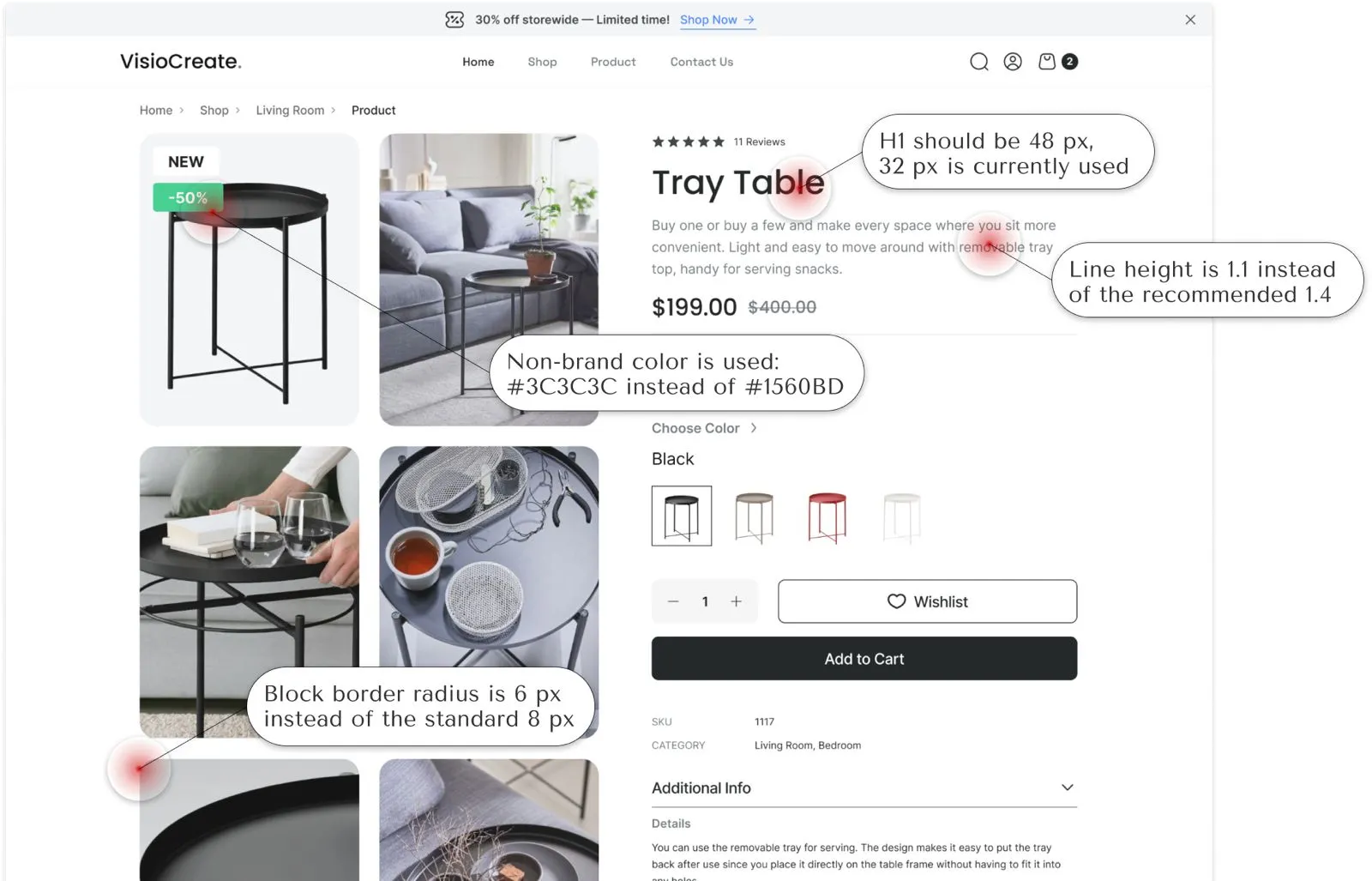
The tool works on top of existing design software and validates layouts against predefined rules — instantly.
In practice, it acts as a virtual Head of Design:
- - checking consistency,
- - catching accessibility issues,
- - validating localization logic,
- - and flagging problems before a human review ever starts.
How It Works (Without the Buzzwords)
The system combines visual understanding and structured reasoning.
It “reads” mockups, analyzes component structure, and ranks issues by severity. Designers don’t get a wall of comments — they get prioritized, actionable feedback.
Several AI models are used under the hood, but the key point is not the models themselves.
The key point is reliability:
- - predictable results,
- - low false positives,
- - and feedback designers can trust.
The architecture is also flexible. If a better or cheaper model appears, the team can switch providers without rebuilding the system.
The Impact
After rollout, the results were immediate:
- - Design iteration cycles became twice as fast
- - Routine review workload dropped by roughly 80%
- - Around 100 designers adopted the tool organically
Most importantly, reviews changed in nature.
Instead of debating spacing and alignment, teams started discussing ideas, concepts, and product decisions.
What Designers Said
Head of Design Systems, Marketplace Platform
At first I was skeptical - I know our system inside out. But when AI Head of Design spotted inconsistencies in some spacing that I had missed myself, my attitude changed. It even sparked a bit of a competitive feeling.
Design Lead, Marketplace Platform
Reviews used to be stressful: I was afraid of getting torn apart over minor mistakes. Now I run the mockups through out AI Head of Design to fix everything in five minutes, and go into the meeting feeling confident. We finally discuss ideas instead of technical errors.
Final Thought
AI won’t replace heads of design.
But it can give them their time back.
And at scale, that might be the most valuable design upgrade of all.
.webp)
.webp)


.webp)
