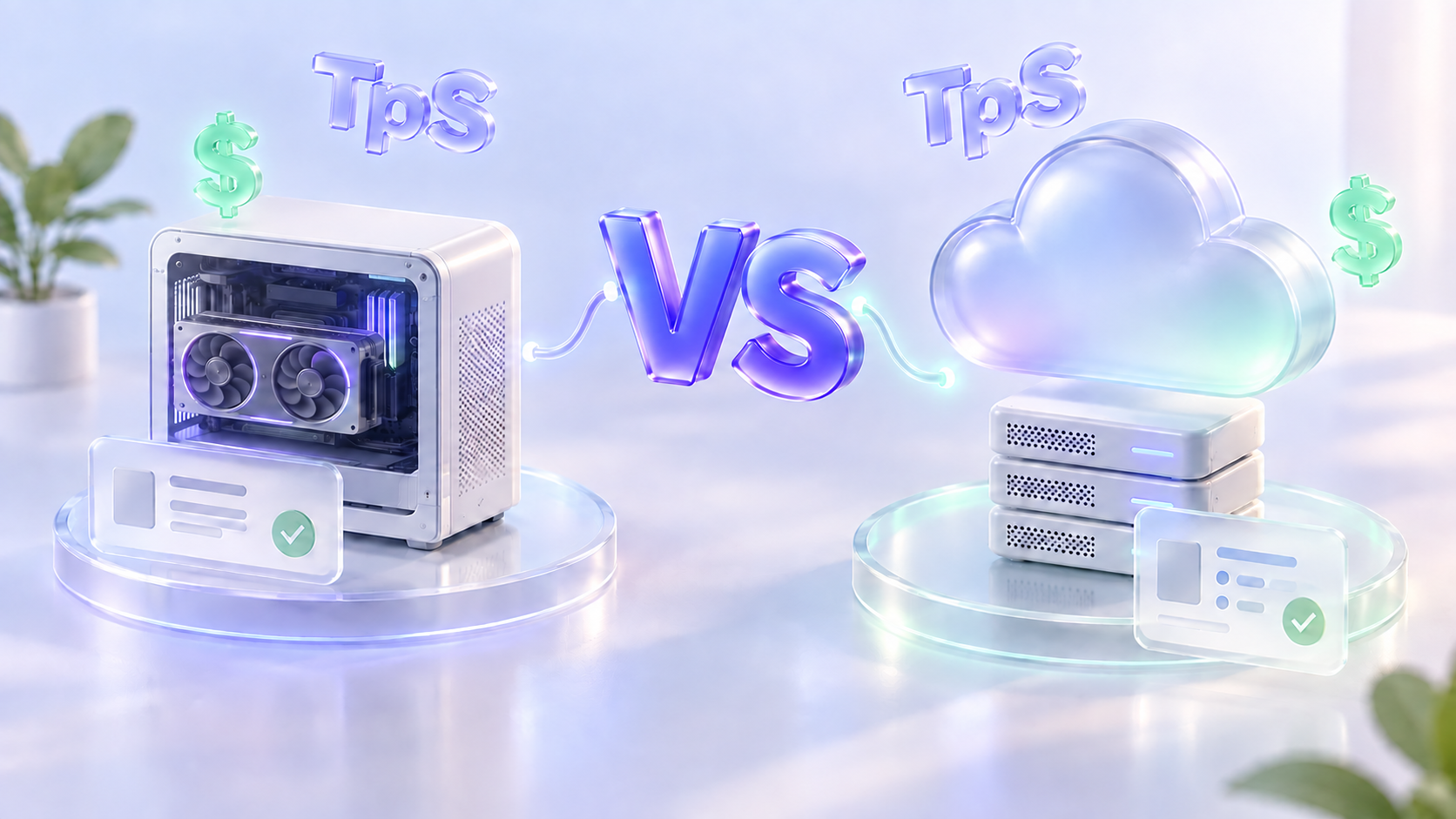

MiniMax Speech 2.8 Turbo vs HD The Ultimate 2026 TTS Showdown
What Is MiniMax Speech 2.8? Architecture, Breakthroughs & Why It Matters in 2026
MiniMax Speech 2.8 is the newest flagship of the Speech series, replacing Speech 2.6 as the most capable TTS family the company has ever shipped. Both variants — Turbo and HD — share the same architectural foundation: an autoregressive Transformer backbone paired with a learnable speaker encoder and a hybrid Flow-VAE decoder. That combination means the model doesn't just predict tokens from text, it deeply infers speaker identity and reconstructs audio waveforms with a precision that previous generations couldn't approach.
The jump from 2.6 to 2.8 isn't incremental. The team rebuilt tonal nuance handling from the ground up, significantly improved timbre similarity in voice cloning tasks, added full interjection tag support (new to this series), and expanded multilingual coverage to 40+ languages with dialect-level awareness. It also topped both the Artificial Analysis Speech Arena and Hugging Face TTS Arena, the two most respected public benchmarks in the space, which is the kind of signal that doesn't lie.
Model Family Evolution
Both 2.8 variants share a core capability set: 7 emotion modes, full pronunciation dictionary support, granular audio parameter control (speed, pitch, volume, bitrate, sample rate), and real-time streaming. The difference between them lives in how aggressively each model trades compute for quality, and that tradeoff shapes every use case decision you'll make.
MiniMax Speech 2.8 Turbo: Blazing-Fast TTS for Real-Time & High-Volume Workflows
Speech 2.8 Turbo is built for one primary goal: get audio to your application as fast as possible without sacrificing the naturalness that makes speech actually usable. In practice, that means 2–3× lower latency than HD and significantly higher throughput per dollar, a combination that opens up use cases that were previously impractical or cost-prohibitive at scale.
The Turbo model doesn't just "work fast", it actually delivers expressive, nuanced speech that holds up in production. The emotion system, interjection tags, and voice cloning stack are identical to HD's capabilities. What changes is how the decoder balances acoustic precision against inference speed. For most real-world listeners in real-time contexts, the quality difference between Turbo and HD is nearly imperceptible; the gap becomes meaningful only in critical listening environments like studio production or high-end broadcast.
MiniMax Speech 2.8 HD: Studio-Grade Quality That Rivals Professional Voice Actors
Speech 2.8 HD is what happens when you stop optimizing for speed and put every available compute cycle toward one goal: producing the most realistic, emotionally nuanced, broadcast-quality speech that a neural model can generate in 2026. The result is audio that consistently surprises people who are used to what "AI voice" typically sounds like.
HD's acoustic superiority comes down to how the model's Flow-VAE decoder reconstructs waveforms. Where Turbo uses a streamlined decoding pass optimized for throughput, HD takes a fuller, more iterative approach to audio reconstruction, particularly around consonant clarity, sibilants, breath control, and the subtle variations in pitch that make speech sound like a real person rather than a synthesis artifact. When you're producing something that people will listen to on good headphones or a professional speaker system, HD is the only choice.
MiniMax Speech 2.8 Turbo vs HD — Which One Should You Choose?
The honest answer: for most production teams, you'll end up using both. Turbo handles the live and iterative work; HD handles the final deliverable. But if you have to pick one to start with, here's the full breakdown.
Decision Matrix
Building a live voice assistant or real-time chat agent → Turbo
Producing an audiobook or podcast series → HD
High-throughput content generation (1M+ chars/day) → Turbo
Final voiceover for a commercial or branded video → HD
Rapid iteration and voiceover drafts →Turbo
Multilingual e-learning content with professional delivery → HD
Full production pipeline (draft → review → final) → Both
Advanced Features That Make Speech 2.8 Stand Out
Beyond speed and quality, Speech 2.8 ships with a full suite of features that make it genuinely production-ready from day one, not just as a demo. Here's what's available across both variants.
Interjection Tags (New in 2.8)
Insert realistic non-verbal sounds directly into your text: (laughs), (sighs), (gasps). Exclusive to the Speech 2.8 series.
40+ Languages & Dialects
Covers English, Mandarin, Spanish, French, German, Japanese, Korean, Arabic, Portuguese, Hindi, and dozens more with dialect-aware pronunciation. All emotion and cloning features work cross-linguistically.
Full Audio Parameter Control
Tune speed (0.5–2×), pitch, volume, bitrate (up to 320kbps), and sample rate (up to 44.1kHz on HD) — per request, programmatically, with no additional tooling required.
Real-Time Streaming
Both models support chunked streaming responses so you can start playing audio before the full generation is complete. Critical for conversational applications where perceived latency matters more than absolute generation time.
Pronunciation Dictionary
Define custom pronunciation rules for brand names, technical terms, or unusual proper nouns. Supports phoneme-level overrides for the most demanding accuracy requirements, particularly valuable for medical and legal content.
How Developers & Creators Are Using MiniMax Speech 2.8 Turbo & HD
The range of use cases has expanded dramatically with Speech 2.8, partly because of the quality jump, and partly because the pricing structure on aimlapi.com makes large-scale deployment actually viable without eye-watering infrastructure costs.
Video narration & YouTube automation
Teams are using Turbo for rapid first-cut narration at scale, then switching to HD for final publish-ready versions. Combined with MiniMax Music 2.6, entire video soundtracks can be produced through a single API pipeline.
Multilingual customer support agents
Speech 2.8 Turbo's 40-language coverage and ultra-low latency make it the default choice for customer-facing voice agents handling queries in multiple regions. One cloned brand voice, deployed globally.
Audiobook & podcast production
Independent authors and production studios are using HD to produce full audiobooks with consistent narrator voice, emotion-accurate delivery, and broadcast-grade audio — at a fraction of traditional voice-over costs.
Game characters & interactive experiences
Game studios are leveraging voice cloning to generate thousands of voiced NPC lines from a small reference set, with emotion tags enabling dynamic in-context delivery based on game state. Turbo handles dynamic runtime generation; HD handles scripted cutscenes.
E-learning & corporate training
HR and L&D teams are replacing costly studio re-recordings with Speech 2.8 HD for their training modules, updating content in minutes when scripts change, maintaining a consistent brand voice across all courses.
Common Questions Answered
What is MiniMax Speech 2.8 and how does it differ from Speech 2.6?
MiniMax Speech 2.8 is the current flagship TTS model family, available in Turbo and HD variants. Compared to Speech 2.6, version 2.8 adds interjection tag support, improves tonal nuance and timbre similarity in voice cloning, expands language coverage from ~32 to 40+, and increases the emotion set from 5 to 7 modes. It also ranks at the top of both Artificial Analysis and Hugging Face TTS Arena benchmarks — positions Speech 2.6 never held.
What is the difference between Speech 2.8 Turbo and HD?
Turbo is optimized for speed and cost — roughly 2–3× faster than HD with lower per-character pricing. HD is optimized for audio quality, delivering broadcast-grade fidelity, richer timbre, and deeper emotional nuance. Both share the same feature set (emotions, interjections, voice cloning, languages). The right choice depends on whether latency or audio perfection is the priority in your use case.
How many languages does MiniMax Speech 2.8 support?
Both Speech 2.8 Turbo and HD support 40+ languages, including English, Mandarin, Spanish, French, German, Japanese, Korean, Arabic, Portuguese, Hindi, Dutch, Italian, Turkish, and many more. Voice cloning and emotion tags work cross-linguistically, you can clone an English voice and use it to speak Spanish with the same timbre.
Does MiniMax Speech 2.8 support voice cloning?
Yes, zero-shot voice cloning from a 3–10 second audio sample is supported in both Turbo and HD. The model preserves the speaker's timbre, accent, and speaking rhythm. No fine-tuning or model training is required; the reference audio is passed directly at inference time.
What are interjection tags and which models support them?
Interjection tags are inline markers in your input text that tell the model to generate a specific non-verbal vocal sound at that point in the audio. Examples include (laughs), (sighs), (gasps), (pauses), and (clears throat). This feature is exclusive to the Speech 2.8 family, it was not available in Speech 2.6 or earlier.
.webp)