


Overview
Qwen Image 2.0 Pro by Alibaba Cloud
Qwen Image 2.0 Pro is especially valuable for marketing teams, designers, and content creators who need production-grade assets rather than experimental visuals.
What Is Qwen Image 2.0 Pro API?
Qwen Image 2.0 Pro is a multimodal AI image generation model designed to produce high-resolution, layout-aware visuals with reliable text rendering and integrated editing capabilities. It combines text-to-image generation and image editing in a single unified system, removing the need for multiple disconnected tools.
Instead of treating images as purely artistic outputs, the model treats them as structured visual documents, similar to posters, slides, or infographics, where composition and readability are just as important as aesthetics.
Core Capabilities of Qwen Image 2.0 Pro
Native 2K Resolution Output
One of the defining features of Qwen Image 2.0 Pro is its ability to generate images in native 2K resolution. This means the output is sharp and detailed from the start, without requiring upscaling or post-processing enhancement.
Textures appear more natural, edges remain clean, and overall clarity holds up even in complex scenes with multiple elements. For production workflows, this eliminates a common bottleneck where AI-generated images require additional refinement before use.
Reliable Text Rendering Inside Images
Text generation inside AI images has traditionally been one of the weakest points across models. Letters often distort, spacing breaks, and entire words become unreadable.
Qwen Image 2.0 Pro addresses this by introducing a dedicated text-aware rendering system that supports clean typography, multi-line structures, and consistent spacing. This allows users to generate posters, ads, and infographics where text is not just decorative but actually usable.
Unified Generation and Editing Workflow
Another major advantage of Qwen Image 2.0 Pro is its unified workflow. Instead of generating an image, exporting it, and editing it in a separate tool, users can refine visuals directly within the same environment.
You can adjust text, modify layout structure, or change stylistic direction without restarting the entire generation process. This dramatically reduces iteration time and makes the creative process more fluid.
Long and Structured Prompt Understanding
The model supports extended prompts that can include complex instructions, multi-section layouts, and detailed visual descriptions. This allows users to define entire compositions in a single input rather than relying on iterative prompt adjustments.
For example, instead of describing a simple scene, users can define a full infographic layout with headings, sections, and embedded text blocks, all interpreted consistently by the model.
Layout-Aware Visual Composition
Unlike traditional diffusion models that treat images as flat visual outputs, Qwen Image 2.0 Pro understands spatial organization. It can structure content into logical zones, maintain alignment, and preserve visual hierarchy across complex designs.
This makes it capable of generating outputs that resemble professionally designed marketing materials rather than unstructured AI art.
Use Cases
Marketing and Advertising Creatives
For marketing teams, Qwen Image 2.0 Pro is particularly useful for producing ad creatives at scale. Instead of relying on designers for every variation, teams can generate multiple campaign assets quickly and test variations across channels.
Infographics and Educational Content
The model is also highly effective for generating structured educational visuals. Because it handles text and layout well, it can turn complex information into clean, readable infographics that are ready for publishing.
Presentation and Slide Design
Another strong use case is presentation design. Qwen Image 2.0 Pro can generate slide-ready visuals with headings, structured sections, and clear hierarchy. Instead of manually building slides, users can generate complete visual concepts that are already formatted for presentation use.
Social Media Content Creation
For social media teams, the model simplifies content production by enabling fast creation of visually consistent posts. Whether it’s announcements, promotional graphics, or storytelling visuals, the outputs are immediately usable across platforms.
Strengths and Limitations
Qwen Image 2.0 Pro stands out by bridging the gap between generative AI and production-ready design. It streamlines workflows by minimizing reliance on external editing tools and accelerating visual output at scale.
However, it is not positioned as a replacement for advanced design environments. In scenarios requiring fine-grained control, complex layering, or precise manual adjustments, traditional tools such as Figma and Photoshop remain indispensable.
Additionally, the model achieves its best performance when inputs are structured and descriptive. This improves output quality and consistency, though it introduces a modest onboarding curve for new users.
Benchmarks
| Benchmark | Result | Source |
|---|---|---|
| Text-to-image arena Elo | 1030 ± 11 | Artificial Analysis, Qwen Image 2.0 Pro (2026-04-22) |
| Image editing arena Elo | 1058 ± 16 | Artificial Analysis, Qwen Image 2.0 Pro (2026-04-22) |
 Source: Artificial Analysis, retrieved Nov 3, 2026.
Pricing
| Usage | Price | Unit |
|---|---|---|
| Usage | $0.075 | per generation |
Quick start
View docs (opens in a new tab)



Build with your agent
Give your agent the model details, code and documentation.
1Get your API key
Create API key (opens in a new tab)export AIMLAPI_KEY="8f2b4c7d9a1e6b3f…"2Make your first request
curl 'https://api.aimlapi.com/v1/images/generations' \
  -H "Authorization: Bearer $AIMLAPI_KEY" \
  -H 'Content-Type: application/json' \
  -d '{
  "model": "alibaba/qwen-image-2.0-pro",
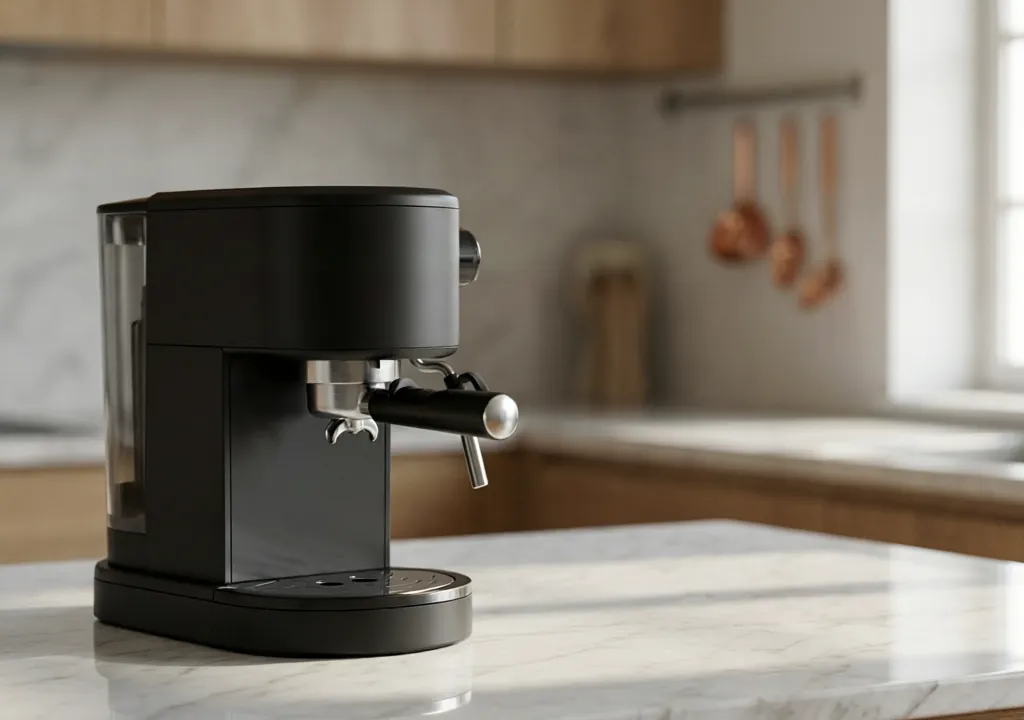
  "prompt": "A product photo of a matte black espresso machine on a marble kitchen counter, soft morning light, shallow depth of field"
}'
import os
import requests
headers = {
"Authorization": f"Bearer {os.environ['AIMLAPI_KEY']}",
"Content-Type": "application/json",
}
payload = {
"model": "alibaba/qwen-image-2.0-pro",
"prompt": "A product photo of a matte black espresso machine on a marble kitchen counter, soft morning light, shallow depth of field"
}
response = requests.post("https://api.aimlapi.com/v1/images/generations", headers=headers, json=payload, timeout=120)
response.raise_for_status()
print(response.json())const response = await fetch("https://api.aimlapi.com/v1/images/generations", {
method: "POST",
headers: {
Authorization: `Bearer ${process.env.AIMLAPI_KEY}`,
"Content-Type": "application/json",
},
body: JSON.stringify({
"model": "alibaba/qwen-image-2.0-pro",
"prompt": "A product photo of a matte black espresso machine on a marble kitchen counter, soft morning light, shallow depth of field"
}),
});
if (!response.ok) throw new Error(`HTTP ${response.status}`);
console.log(await response.json());Related models

Frequently asked questions
What inputs and outputs does Qwen Image 2.0 Pro support?
Qwen Image 2.0 Pro takes image, text as input and returns image.
When was Qwen Image 2.0 Pro released?
Qwen Image 2.0 Pro became available on April 21, 2026.
How is Qwen Image 2.0 Pro billed?
Qwen Image 2.0 Pro is billed per generation, a fixed charge per output rather than by prompt length.
Can Qwen Image 2.0 Pro take an existing image as input?
Yes, Qwen Image 2.0 Pro accepts image input as well as a text prompt.
Who created Qwen Image 2.0 Pro?
Qwen Image 2.0 Pro was built by Alibaba Cloud.
How do I call Qwen Image 2.0 Pro on AI/ML API?
Send a request to https://api.aimlapi.com/v1/images/generations with alibaba/qwen-image-2.0-pro as the model id.
Is Qwen Image 2.0 Pro available through a single API key?
Yes. Qwen Image 2.0 Pro is served through AI/ML API, so the same key and endpoint format used for other models applies.