
Nano Banana Pro Flash: Fast Gemini 3 Image Generation
Rumors about a model informally referred to as Nano Banana Pro Flash have quickly gained traction across AI communities. Although the name does not appear in any official Google release notes, its structure fits the long-standing pattern of internal code names used during the development of Google’s image generation systems. The speculation arises from early references to Nano Banana and from the expectation that Google will continue refining its high-speed Flash series.
A Recognizable Evolution Path
The transition from Gemini 2.5 Flash Image to Gemini 3 Pro Image outlined a clear direction of progress. The earlier Flash model prioritized low latency and affordability, enabling rapid prototyping, instant previews, and scalable rendering workflows. Developers chose it when speed and output volume mattered more than fine detail.
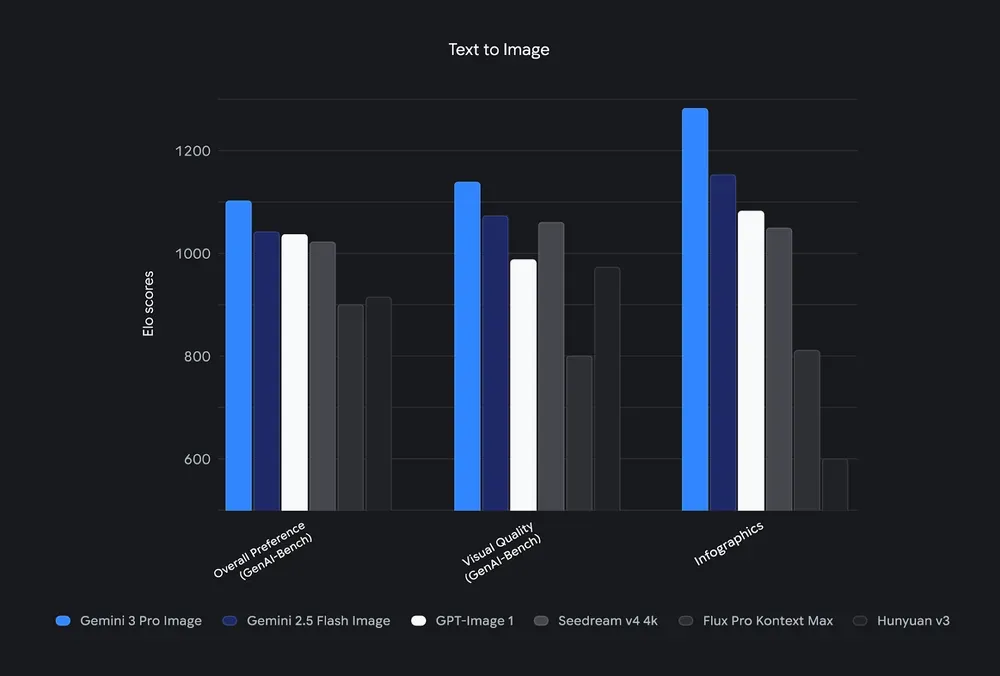
Nano Banana 2 represented a shift toward higher creative fidelity. The model improved diffusion stages, achieved more stable lighting and depth, and became significantly better at interpreting nuanced text prompts. It also introduced much stronger text rendering, allowing multilingual typography and context-aware localization within the generated visuals. This trajectory naturally fuels expectations that Google may be preparing a hybrid variant that offers Gemini 3 Pro’s quality with Flash-tier speed.
Community Discussions
In discussions across Reddit and X, users often treat Nano Banana Pro Flash as if it were a secret early build or an internal codename. Some expect a faster version of Gemini 3 Flash, optimized for higher-resolution outputs. Others speculate about a unified model that finally resolves the long-standing questions around Google’s image tools.
These threads typically blend excitement with skepticism. Some users argue Google’s image models still feel underrated compared to the hype of more popular generators, while others share examples showing that Gemini image gen can already match or exceed expectations when prompted precisely.
Realistic Capabilities
If Google is developing a faster version of Gemini 3, it would likely follow the pattern of previous Flash releases, which cut rendering latency by roughly half while keeping most of the visual quality of the Pro tier. A similar approach here could deliver images in about a second for standard prompts, supporting near-instant iteration in interactive and mobile workflows.
A speed-optimized model would probably use additional diffusion compressions while holding onto Gemini 3’s cinematic lighting, stable geometry, and surface realism. Quality differences would be noticeable mainly in extreme close-ups or high-resolution formats such as 4K.
One of the most anticipated elements would be the preservation of advanced text rendering. Nano Banana Pro already produces clear, typographically correct text across Latin, Cyrillic, Arabic, and East Asian scripts while adapting visuals to regional contexts. For global brands managing large-scale localized content, this is a defining capability. A Flash version that maintains this strength would simplify multilingual creative pipelines.
Safety would remain foundational. Google consistently embeds prompt assessment and post-generation filtering throughout both Flash and Pro models. Enterprise environments depend on this consistency for governance and compliance, making moderation layers essential regardless of speed optimization.
Why a Faster Gemini 3 Model Would Matter
The demand for real-time creative tools continues to rise. A fast variant of Gemini 3 would accelerate iterative design, letting artists regenerate, refine, and test visual ideas almost instantly. This shift from batch rendering to immediate feedback would reduce friction in art direction, UI design, advertising, and other production workflows.
Localization pipelines would also benefit. Many companies still rely on complex, multi-stage processes to adapt visuals for different regions. A lightweight Gemini 3 capable of producing market-specific imagery directly from prompts would collapse these steps into a single pass, enabling faster rollouts and fewer manual fixes.
Scalability is another advantage. Modern applications increasingly rely on personalized visuals in areas like gaming, retail, learning, and media. A Flash-style model with lower GPU overhead could scale horizontally, support edge deployments, and operate efficiently on mobile infrastructure, making real-time custom imagery more practical under heavy load.
Limitations and Misconceptions
Earlier Flash models delivered notable speed gains, but no verified metrics exist for any Gemini 3 Flash variant. Community assumptions about render time, cost, or changes in text accuracy are extrapolations rather than confirmed data.
Leaked demo clips add more confusion. Google’s internal builds sometimes surface during partner testing or sandbox trials, and fragments of these sessions occasionally reach the public. These glimpses often reflect early prototypes rather than production-ready systems, and the difference between the two can be substantial.
Conclusion
While Nano Banana Pro Flash is not an official model name, the speculation surrounding it reflects a well-grounded expectation: the industry is anticipating a faster, lighter version of Gemini 3 Pro that retains its strongest capabilities. A model that combines high-fidelity rendering, multilingual text accuracy, and real-time responsiveness would significantly impact creative teams, enterprise workflows, and interactive software experiences.
Should such a model be released, it would likely become a core component of Google’s next generation of image tools, influencing the competitive landscape and setting new standards for speed-driven AI creativity.
Explore AI/ML API, a unified platform where you can test, deploy, and integrate top-tier generative tools with minimal setup.
Frequently Asked Questions
Q:What are the key differences between Nano Banana Pro and a potential Flash variant?
A: Expected differences would involve:
- Speed: Flash would generate images faster.
- Cost: Flash models typically offer reduced pricing.
- Quality: Pro would still deliver the highest fidelity.
Q: Why would a faster Gemini 3 matter for real-world workflows?
A: A speed-optimized model would support near-instant iteration for designers, streamline localization by generating market-ready imagery in one step, and allow large-scale applications to render personalized visuals efficiently even on mobile or edge infrastructure.
Q: Is there any proof that early demo clips circulating online show this model?
A: No verified evidence exists. Many clips come from internal partner testing environments and may reflect early prototypes. These samples often differ significantly from production builds, making them unreliable indicators of final performance.
Q: Would a Gemini 3 Flash-style model keep the same image quality as Gemini 3 Pro?
A: It would likely preserve the core look, cinematic lighting, stable geometry, and strong text rendering, but with slight reductions in extreme close-ups or very high-resolution formats. Flash variants traditionally trade a small amount of precision for major speed gains.
%201.webp)