
Gemini 3.5 Flash: Google's Fast AI Model Explained
Model at a Glance
Flash models used to mean compromise. You'd reach for one when you needed speed over smarts, accepting the quality tradeoff as part of the deal. Gemini 3.5 Flash changes that calculation entirely.
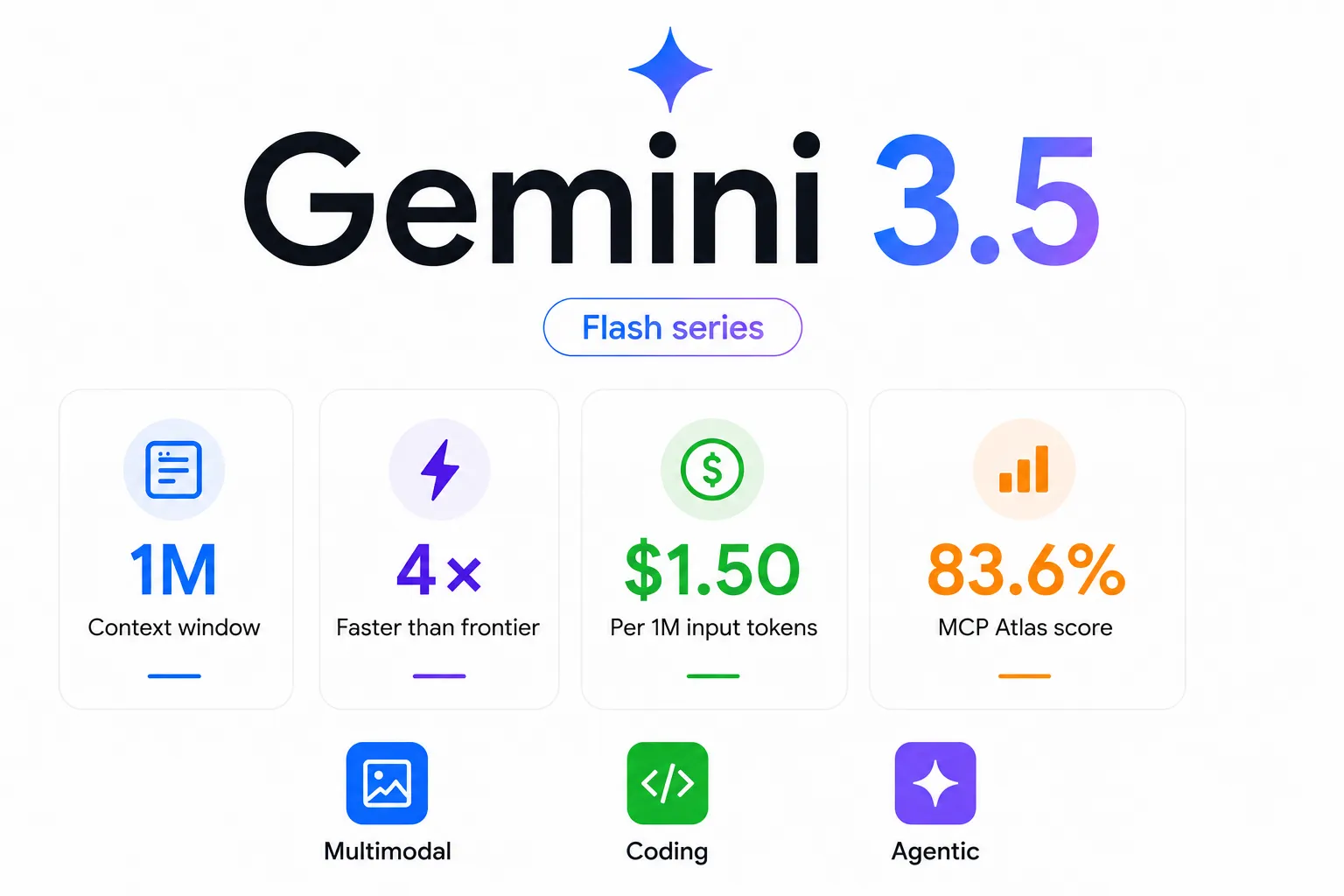
Announced at Google I/O 2026 on May 19, Gemini 3.5 Flash is the first model in the new Gemini 3.5 family and, by most measures, the most capable AI model Google's Flash series has ever shipped. It outperforms Gemini 3.1 Pro on agentic and coding benchmarks while running roughly four times faster than comparable frontier models and at a price that's around 40% cheaper than Pro.
For developers building AI-powered products, that matters enormously. Speed and cost directly determine what's feasible in production. When a model can run complex, multi-step tasks at Flash-tier latency without losing flagship-quality reasoning, whole categories of applications become practical that weren't before.
What Is Gemini 3.5 Flash?
Gemini 3.5 Flash is a large multimodal language model developed by Google DeepMind. It sits within the Gemini family — Google's primary line of AI models — and occupies the "Flash" tier: models optimized for low latency, high throughput, and efficient token use, as opposed to the "Pro" tier, which prioritizes maximum reasoning depth.
What makes 3.5 Flash different from every previous Flash model is the performance ceiling it has broken through. Google describes the Gemini 3.5 family as combining frontier intelligence with action, and the framing is deliberate. This is the first Flash model that doesn't just approach Pro-level performance on certain tasks, it beats Gemini 3.1 Pro on the benchmarks that matter most for real-world AI applications: coding, agentic tool use, and multimodal understanding.
The model is natively multimodal, accepting text, images, audio, video, and PDFs as inputs, and generating text outputs. It supports a 1-million-token context window and ships with built-in support for function calling, structured output, search-as-a-tool, and code execution.
Key Features of Gemini 3.5 Flash
Speed and Latency
Speed in AI models is often dismissed as a secondary concern, but for production applications it's decisive. When a model is integrated into a coding assistant, an agentic pipeline, or a real-time product feature, latency compounds. Slow models make products feel sluggish; they also cost more when you're running thousands of concurrent requests.
Gemini 3.5 Flash runs at roughly four times the output speed of comparable frontier models measured in tokens per second. This puts it in the top-right quadrant of the Artificial Analysis Intelligence Index — a rare position that combines high capability scores with fast throughput. Google achieved this partly through architectural efficiency and partly through training innovations that allow the model to deliver strong reasoning without the compute overhead of larger parameter counts.
Agentic Workflows
The model's design centers on what Google calls long-horizon agentic execution: tasks where the AI must plan a sequence of steps, call external tools, evaluate intermediate results, and adjust course — sometimes over hours or even days, under human supervision.
In practice, this shows up in capabilities like parallel sub-agent coordination (where multiple instances of the model work simultaneously on different parts of a problem), multi-turn tool calling with persistent context, and reliable execution of complex workflows without losing track of earlier steps. Google's Antigravity platform is built around these capabilities, and 3.5 Flash is its primary engine.
Real-world examples from Google's launch demonstrate the range: ingesting the AlphaGo research paper and autonomously coding a functional game; coordinating multiple agents to rename and categorize thousands of unstructured files; transforming legacy codebases to modern frameworks; designing virtual environments through parallel creative agents.
Multimodal Capabilities
Unlike models that bolt vision onto a text foundation, Gemini 3.5 Flash was built multimodal from the ground up. It can analyze complex charts and extract quantitative insights, understand the spatial relationships in images and video frames, process audio for transcription or reasoning tasks, and read PDFs structurally rather than just as text streams.
This shows up in benchmark performance, 84.2% on CharXiv Reasoning (chart understanding) and 83.6% on MMMU-Pro (multimodal reasoning), but more importantly it shows up in the kinds of products you can build. Automated invoice processing, interactive UI generation from screenshots, document analysis at scale: these all depend on reliable cross-modal reasoning, not just text generation.
Long Context Window
The 1,048,576-token context window (roughly 750,000 words) is large enough to hold entire codebases, lengthy legal contracts, multi-session research conversations, or long-form analysis tasks in a single prompt. Crucially, Flash models have flat pricing regardless of context length, which removes the cost uncertainty that can make long-context workloads difficult to budget for. Gemini 3.5 Flash supports up to 65,536 output tokens per request.
Dynamic Thinking
The model ships with dynamic thinking enabled by default — an approach where the model applies more compute to harder problems and less to simpler ones, rather than thinking at a fixed depth for every query. This helps maintain both quality and cost-efficiency across a wide range of task difficulty levels, without the user needing to manually configure reasoning depth for each request type.
Gemini 3.5 Flash Benchmarks
Benchmark numbers only tell you something useful if you know what they're measuring. The table below covers the benchmarks Google highlights for 3.5 Flash, along with what each one actually tests and why the score matters for real-world use.
What the benchmarks tell you overall
Gemini 3.5 Flash leads the field on agentic and multimodal tasks — the categories most relevant to products being built today. It trails slightly on the hardest pure-reasoning benchmarks (Humanity's Last Exam, ARC-AGI-2), where Claude Opus 4.7 and GPT-5.5 currently hold the top spots. For builders, the takeaway is clear: this model excels where the work is complex and multi-step, not where a single question demands maximum academic depth.
Gemini 3.5 Flash vs Gemini 3.1 Pro
This is the comparison that matters most for teams making purchasing decisions right now. Gemini 3.1 Pro was previously the go-to choice for demanding tasks where quality was non-negotiable. Gemini 3.5 Flash has taken that crown in several key areas, but not all of them.
When to choose 3.5 Flash over 3.1 Pro
The answer is simpler than you might expect: for most agentic workflows, coding assistants, and multimodal applications, Gemini 3.5 Flash is now the better choice — and also the cheaper, faster one. That's a rare combination. You're not making a quality sacrifice anymore; you're getting better results on the tasks that dominate actual AI product development.
When 3.1 Pro still has the edge
Gemini 3.1 Pro holds a meaningful lead on benchmarks that measure abstract reasoning depth (ARC-AGI-2, Humanity's Last Exam) and on long-context retrieval tasks at the 128k range. If your use case centers on single-shot questions that require maximum academic reasoning, or on retrieving specific needles from very long documents, Pro remains the more reliable choice. But those use cases represent a narrower slice of real-world applications than the agentic and multimodal tasks where Flash now leads.
Gemini 3.5 Flash vs Gemini 2.5 Flash
For teams currently running on Gemini 2.5 Flash, the upgrade decision is more straightforward. The two generations sit at very different capability levels.
Gemini 2.5 Flash was a solid model for its time — a hybrid reasoning model with good multimodal performance and competitive pricing ($0.30 per million input tokens). But it was built before Google's agentic-first design philosophy fully matured, and it shows in the benchmark gaps.
3.5 Flash is meaningfully more capable but costs 5× more per million input tokens. For high-volume, lower-complexity workloads, 2.5 Flash may still be the economical choice. But for anything that involves agentic execution, multi-step reasoning, or multimodal analysis at quality levels that matter to end users, the 3.5 generation represents a significant step up that justifies the cost increase.
Pricing and API Access
Gemini 3.5 Flash is priced at the mid-tier of the Flash family — more expensive than older Flash models, but significantly cheaper than flagship Pro models, and far faster.
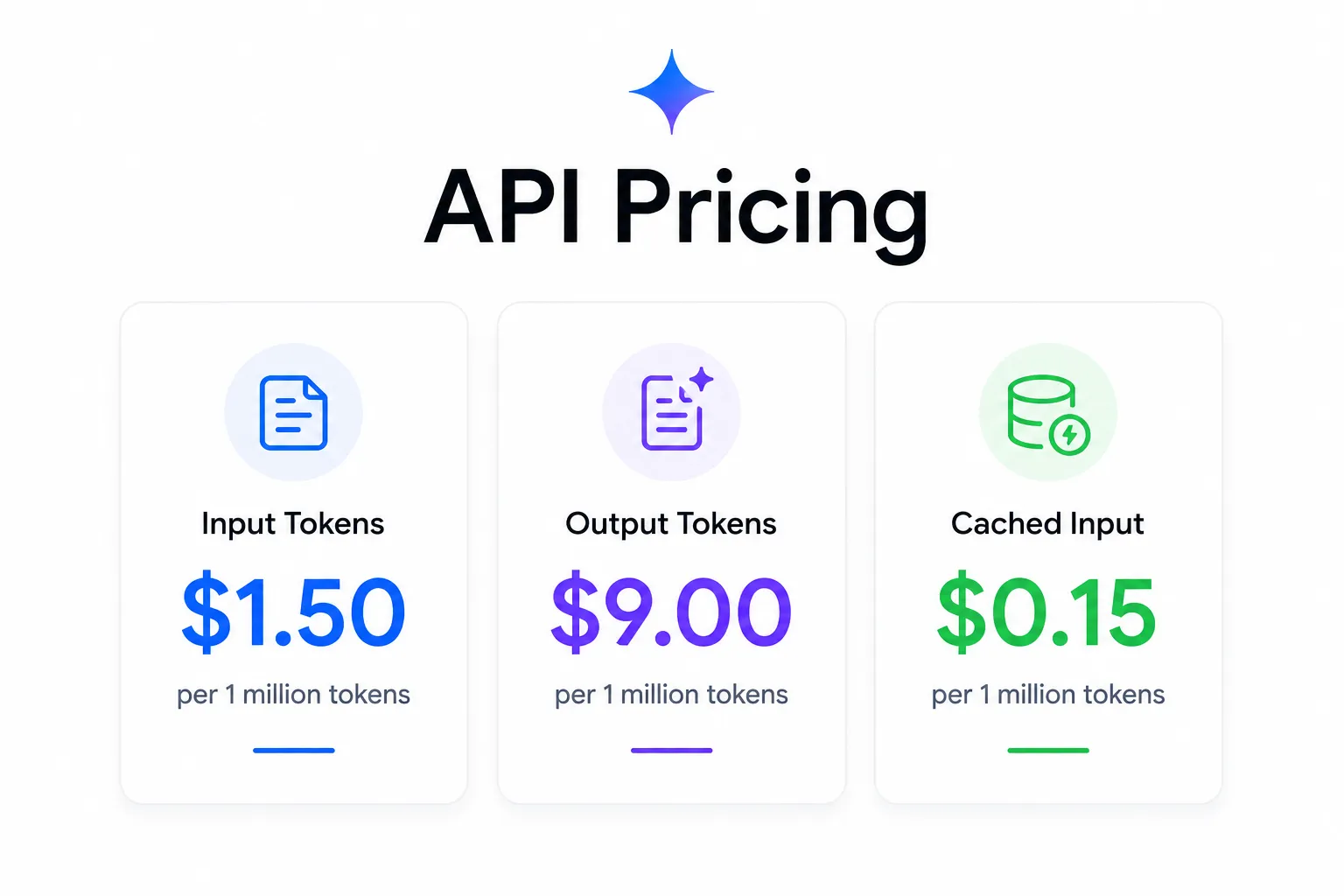
Non-global regions are priced slightly higher at $1.65 per million input tokens and $9.90 per million output tokens. Context caching — where you store a repeated prompt prefix and only pay once — brings the effective input cost down to $0.15 per million tokens on cached content, which is highly cost-effective for agentic applications that reuse large system prompts across many calls.
What this means in practice: A developer running a coding assistant that processes 10,000 requests per day, each averaging 2,000 input tokens and 500 output tokens, would spend roughly $30 per day on input and $45 per day on output. With effective caching of system prompts, that input cost drops substantially. Compare this to similar-quality Pro-tier models, which would run 2–3× higher on both dimensions.
Free Access
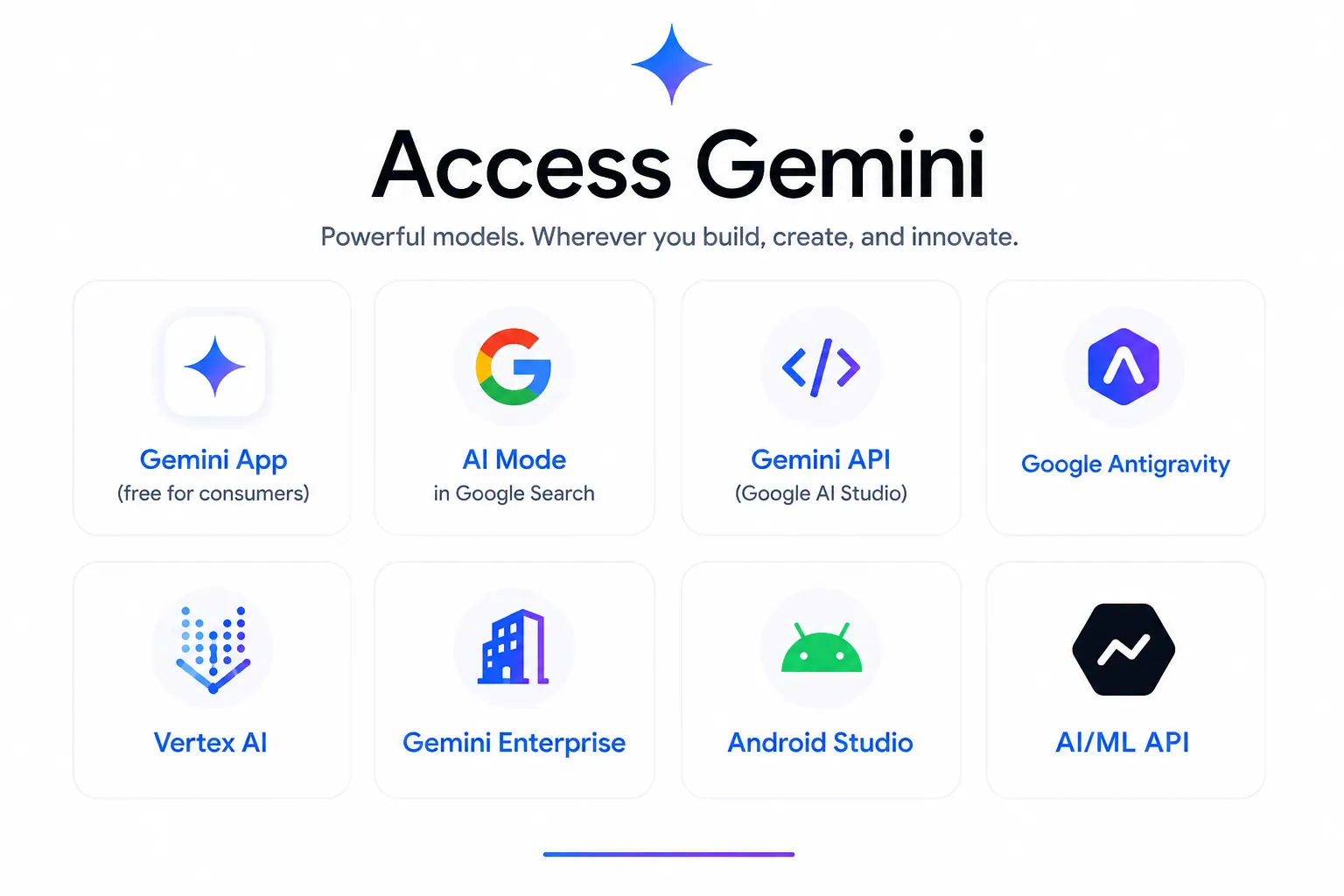
For end users, Gemini 3.5 Flash is free through the Gemini app and through AI Mode in Google Search. There's no usage cap advertised for consumers — it's the default model powering both products globally.
Where to Use It
Best Use Cases for Gemini 3.5 Flash
Gemini 3.5 Flash's design philosophy — fast, agentic, multimodal, cost-efficient — makes it a strong fit for a specific cluster of use cases. Here's where it genuinely excels.
Coding
Coding Assistants and IDEs
With a 76.2% Terminal-Bench 2.1 score, 3.5 Flash is now one of the strongest coding models available. It can write, debug, and refactor code iteratively, understand entire codebases in a single context, and generate multiple implementation variations in parallel. JetBrains' Junie is already seeing 10–20% improvements on lower-complexity coding tasks versus the previous Flash generation.
Automation
Agentic Automation Pipelines
The model's MCP Atlas lead (83.6%) reflects reliable multi-step tool orchestration. It's well-suited for workflows where an AI must coordinate external APIs, manage file systems, call databases, and synthesize results across many steps — often running faster and at lower cost than alternatives, making parallelization economically viable.
Analytics
Document and Data Analysis
With a 1M-token context and chart reasoning scores at 84.2%, this model handles large-scale document analysis tasks that would be impossible or unreliable with smaller context windows. Financial report generation, legal document review, scientific literature synthesis — all use cases where the model's combination of long-context reading and structured reasoning shines.
Products
Real-Time Product Features
The 4× speed advantage over comparable frontier models is the deciding factor here. AI features embedded in consumer products — autocomplete, suggestions, live analysis — require sub-second or low-second response times to feel natural. 3.5 Flash delivers this without requiring quality sacrifices that would make the feature feel unreliable.
Multimodal
Multimodal Product Features
Image analysis, invoice OCR, UI generation from screenshots, video understanding — applications that require genuine cross-modal reasoning rather than simple image captioning. Ramp is using 3.5 Flash for invoice OCR combined with reasoning over historical patterns. The multimodal foundation here is robust enough for production-grade feature development.
Development
Prototyping and Creative Development
Google's own demos show 3.5 Flash generating six payment UI variants in under 60 seconds, creating 64 fractal variations in parallel, and building animated interactive HTML components from plain-text descriptions. For product teams that need rapid concept exploration, this throughput-at-quality combination changes what's feasible in a sprint.
Who Should Use Gemini 3.5 Flash?
Want to test Gemini 3.5 Flash right now?
AI/ML API gives you one unified endpoint to access Gemini 3.5 Flash alongside 400+ other models, including GPT-5.5, Claude Opus 4.7, Llama 4, Mistral and more, with a single API key.
Frequently Asked Questions
What is Gemini 3.5 Flash?
Gemini 3.5 Flash is Google DeepMind's latest fast AI model, released at Google I/O on May 19, 2026. It's the first model in the Gemini 3.5 family and is designed for agentic workflows, coding, and multimodal tasks. Despite being a Flash-tier model, it outperforms Gemini 3.1 Pro on most coding and agentic benchmarks while running approximately 4× faster than comparable frontier models.
Is Gemini 3.5 Flash better than Gemini 3.1 Pro?
On agentic and coding benchmarks, yes — and it's faster and cheaper. On deep academic reasoning benchmarks like Humanity's Last Exam and ARC-AGI-2, Gemini 3.1 Pro still holds a lead. For most real-world applications, 3.5 Flash is now the better choice. For the hardest single-shot reasoning tasks, 3.1 Pro (or the upcoming 3.5 Pro) remains stronger.
Does Gemini 3.5 Flash support a long context window?
Yes. Gemini 3.5 Flash supports 1,048,576 input tokens (approximately 750,000 words) and up to 65,536 output tokens per request. Flash models have flat pricing regardless of context length, removing the tiered cost structure that makes very long prompts unpredictable with some Pro-tier models.
Is Gemini 3.5 Flash good for coding?
Yes — it's one of the strongest coding models currently available. It scores 76.2% on Terminal-Bench 2.1 (agentic terminal coding), 55.1% on SWE-Bench Pro, and leads on MCP Atlas (multi-step tool use that underlies most coding agent architectures). JetBrains reports 10–20% coding performance improvements over the previous Flash generation.