
Claude vs ChatGPT: The Ultimate comparison guide
Executive Perspective and core distinctions
The modern artificial intelligence landscape is shaped by two conversational platforms that have redefined how people work, create, and analyze information: OpenAI and Anthropic. Both companies have built advanced large language models that serve millions of users worldwide, yet their philosophies and practical strengths differ in meaningful ways.
At a high level, one ecosystem emphasizes creative flexibility, multimodal integration, and broad accessibility. The other focuses on analytical rigor, structured reasoning, and value aligned design. Neither approach is universally superior. The right choice depends entirely on how and why you plan to use the system.
This guide provides a detailed, balanced comparison of their capabilities, architecture, safety principles, workflows, and real world applications. The goal is clarity, not hype.
The Digital Assistant Ecosystem
Conversational AI has moved far beyond simple chatbots. Today’s systems assist with research, programming, design, business analysis, content production, and strategic planning. They function as writing partners, coding assistants, brainstorming collaborators, and analytical engines.
OpenAI and Anthropic represent two mature yet distinct approaches to this evolution. Both rely on transformer based architectures and large scale training processes. Both support long context conversations and complex instruction following. Yet their priorities and optimization strategies lead to noticeably different user experiences.
Understanding these differences requires examining philosophy as much as performance.
Organizational Origins and Development Philosophy
OpenAI: Broad Capability and Ecosystem Expansion
OpenAI has focused on scaling capability across domains. Its strategy emphasizes versatility, real world usability, and rapid iteration. The organization integrates large scale reinforcement learning, user feedback loops, and deployment driven improvements.
The result is a platform designed to handle a wide range of tasks. Creative writing, technical coding, image generation, business drafting, educational support, and multimodal interaction all sit within a unified environment. Accessibility and integration are core priorities.
Anthropic: Constitutional AI and Structured Alignment
Anthropic approaches development through what it calls Constitutional AI. This framework embeds explicit principles into the training and response generation process. The emphasis is on transparent reasoning, safety, and alignment with human values during complex or sensitive interactions.
Rather than maximizing expressive breadth alone, Anthropic prioritizes controlled reasoning, interpretability, and predictable behavior. This orientation is particularly attractive in enterprise and research settings where reliability and governance matter deeply.
Architectural framework and technical infrastructure
Both platforms use advanced transformer based neural networks. However, optimization strategies diverge.
OpenAI emphasizes scalable performance and multimodal integration. Text, image, and audio processing are unified within a flexible architecture that supports interactive workflows. Reinforcement learning with human feedback plays a significant role in refining behavior.
Anthropic’s infrastructure is tuned for coherent reasoning across long contexts. It places special emphasis on high quality training data curation and principle guided self regulation during learning. The architecture is optimized for structured, stepwise thought processes and contextual continuity.
In practice, both systems handle long documents and complex prompts well. Differences emerge more in style and reasoning posture than in raw context capacity.
Core competency assessment
Natural Language Processing
OpenAI’s models are widely recognized for stylistic flexibility. They can shift tone, voice, and format with ease. Marketing copy, narrative storytelling, persuasive essays, and casual conversation feel fluid and engaging.
Anthropic’s models tend to produce methodical, carefully structured responses. Arguments are often presented with logical sequencing and explicit reasoning steps. The tone may feel more analytical and restrained.
Reasoning and Analytical Depth
In logical deduction, structured analysis, and multi step argumentation, Anthropic’s systems often demonstrate strong methodological clarity. They excel in policy drafting, legal style reasoning, and structured breakdowns.
OpenAI’s models are strong in reasoning as well, particularly when prompted effectively. However, they often prioritize conversational flow and usability, which can lead to more intuitive than explicitly procedural responses.
Mathematical and Quantitative Tasks
Both systems handle quantitative reasoning competently. Anthropic’s approach frequently emphasizes stepwise procedural clarity. OpenAI’s models often deliver concise, solution oriented explanations, sometimes favoring brevity over extended breakdown.
Performance metrics and benchmark evaluation
Academic style benchmarks reveal variation across domains rather than clear dominance. Humanities and creative disciplines often highlight OpenAI’s expressive strength. Technical and structured reasoning tasks frequently showcase Anthropic’s disciplined analytical style.
Response speed and latency vary by deployment environment and subscription tier. In practice, most users experience near real time interaction.
Error patterns differ subtly. OpenAI models may occasionally prioritize fluency over exhaustive qualification. Anthropic models may prioritize caution and constraint, especially around ambiguous or sensitive topics. Reliability across complex prompts remains high for both, though performance consistency can vary depending on domain specialization.
Distinctive functionality and specialized capabilities
The platforms diverge significantly in their unique feature implementations. One offers extensive multimodal creation tools including visual generation, auditory processing, and interactive content development. Its ecosystem supports custom agent construction and marketplace integration.
The alternative provides sophisticated document analysis capabilities with advanced contextual understanding and information synthesis. Its project organization system enables complex workflow management and collaborative development environments. Each platform's specialized tools cater to different user requirements and application scenarios.
Multimodal processing and sensory integration
Visual comprehension capabilities display contrasting strengths in image interpretation, visual data extraction, and graphical content analysis. One platform demonstrates superior generative visual artistry while the other excels in analytical image assessment.
Auditory processing implementations vary in speech recognition accuracy, acoustic pattern detection, and audio content transformation. Cross-modal integration approaches differ in how systems correlate information across sensory domains and representational formats.
Computational development proficiency
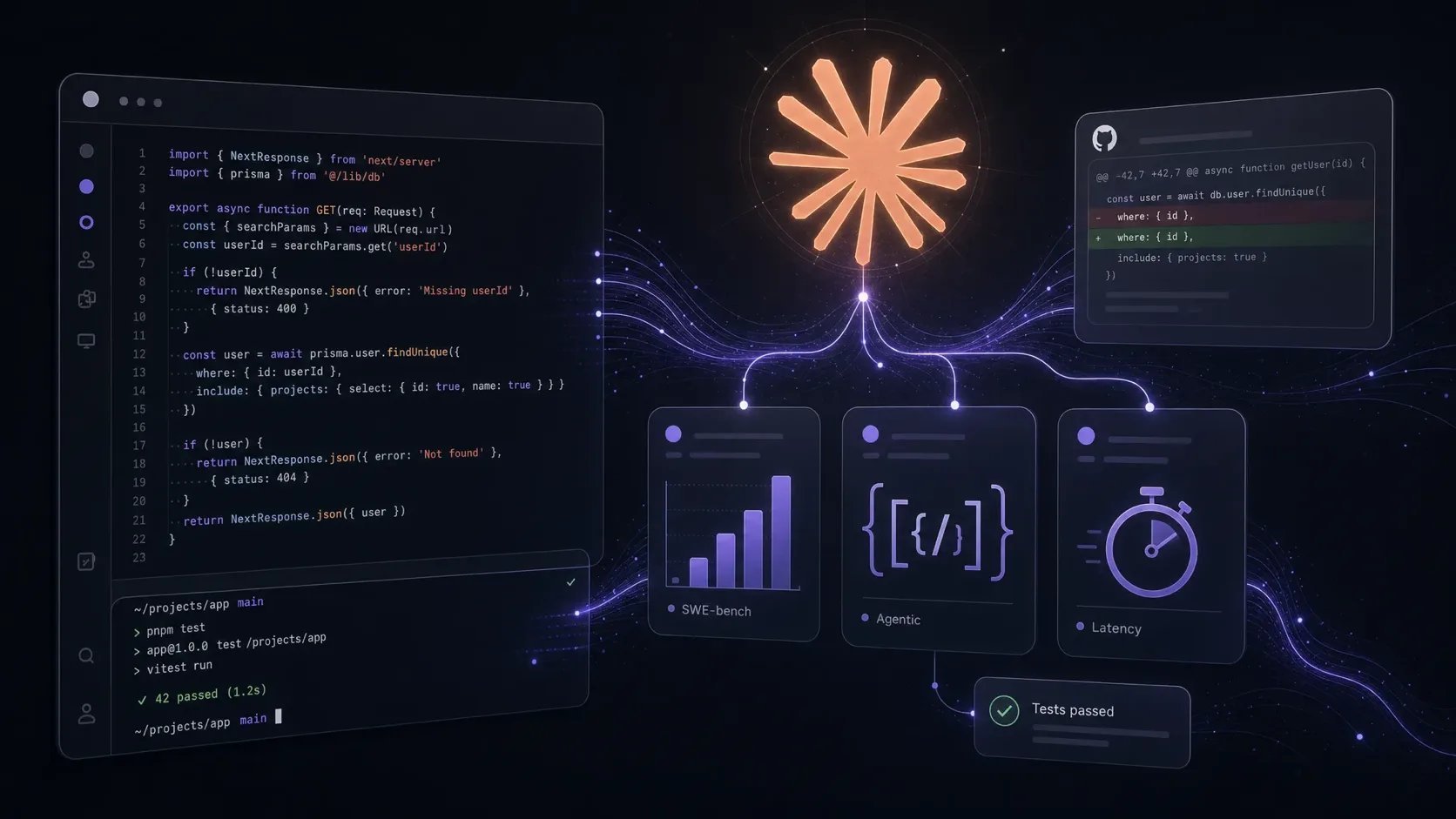
Software engineering capabilities reveal different optimization patterns. Code generation quality varies by programming language, with particular differentiators in syntax precision, algorithmic efficiency, and documentation quality. Debugging assistance demonstrates contrasting methodologies in error identification and resolution strategy.
Technical documentation processing shows varying comprehension depth and information extraction accuracy. Development workflow integration supports different collaboration paradigms and version control compatibility.
Creative Composition and Content Development
Written content creation manifests distinctive stylistic attributes. One platform generates text with engaging narrative flow and audience captivation, while the other produces methodically structured compositions with informational density. Creative ideation processes employ different brainstorming techniques and conceptual development approaches.
Editing capabilities demonstrate varying precision in language refinement, structural optimization, and content enhancement. Adaptation flexibility differs across genres, tones, and communication contexts.
Interface Design and Interaction Experience
User experience design reflects contrasting interaction philosophies. One interface prioritizes intuitive accessibility and exploratory discovery, while the other emphasizes methodological transparency and procedural clarity. Conversation management employs different context retention strategies and dialogue flow optimization techniques.
Customization options support varying degrees of personalization and adaptive behavior modification. Platform accessibility differs in cross-device compatibility and offline functionality.
Safety protocols and ethical considerations
Content governance frameworks employ different moderation methodologies. One platform utilizes comprehensive filtering systems with multi-layered safety checks, while the other implements constitutional principles with explicit value alignment mechanisms. Bias mitigation approaches vary in detection sensitivity and correction effectiveness.
Boundary enforcement demonstrates different response patterns to sensitive queries and ethically complex scenarios. Transparency levels vary in explanation depth and decision process visibility.
Data protection and privacy assurance
Information handling policies reflect different data management philosophies. Retention protocols vary in duration, usage limitations, and user control options. Security implementations employ different encryption standards and access control mechanisms.
Compliance certifications cover varying regulatory requirements and industry-specific standards. Enterprise protection features offer different administrative controls and audit capabilities.
Economic considerations and access models
Subscription structures present different value propositions across usage tiers. Free access levels provide varying capability sets and operational constraints. Premium offerings deliver differentiated feature packages and usage allowances.
API economics present contrasting cost structures for development integration and scalable deployment. Enterprise solutions offer different customization options and service level agreements.
Integration Ecosystem and expansion capabilities
Third-party connectivity supports different integration paradigms and partnership networks. Development resources vary in documentation completeness, library support, and community contribution. Marketplace environments offer different discovery mechanisms and distribution channels.
Extension architectures employ different customization frameworks and interoperability standards. Ecosystem growth demonstrates different expansion velocities and partner engagement levels.
Practical application scenarios
Academic utilization reveals different strengths across educational contexts and research applications. Business implementation shows varying optimization for organizational workflows and corporate environments.
Technical development demonstrates different proficiency levels across programming paradigms and software engineering methodologies. Content production exhibits different excellence across media formats and creative disciplines.
Empirical testing and comparative analysis
Practical evaluation through standardized task batteries reveals performance patterns across domains. Creative challenges highlight different imaginative capacities and stylistic preferences. Analytical problems demonstrate varying methodological rigor and solution elegance.
Technical assessments show different optimization for specialized domains and complexity handling. Real-world simulations reveal practical applicability and user experience quality.
Operational constraints and limitations
Performance boundaries define different capability ceilings and scalability limitations. Content restrictions impose varying constraints on subject matter and expression styles. Technical limitations present different challenges in processing capacity and functional scope.
Accessibility constraints affect different user groups and geographic regions. Integration limitations impose different barriers to workflow incorporation and system compatibility.
Platform Transition and Interoperability
Migration pathways present different complexity levels for project transfer and workflow adaptation. Data portability varies in format support and preservation completeness. Coexistence strategies enable different approaches to complementary usage and capability leveraging.
Integration methodologies support different patterns of cross-platform collaboration and information exchange.
Future Development Trajectories
OpenAI continues expanding multimodal capabilities and ecosystem integration. Innovation is oriented toward unifying text, image, audio, and interactive agents in a seamless workflow.
Anthropic continues refining structured reasoning, interpretability, and safety alignment research. Its roadmap suggests deeper investment in enterprise grade analytical reliability.
Both companies are advancing rapidly, and competitive dynamics are accelerating innovation across the field.
Concluding Analysis and final recommendations
The comparison between OpenAI and Anthropic is not a matter of superiority but of alignment. Each platform reflects a distinct philosophy about how artificial intelligence should serve human goals.
OpenAI emphasizes breadth, creative dynamism, and multimodal integration. Anthropic prioritizes constitutional design, structured reasoning, and deliberate analytical depth.
For individuals and organizations alike, the most effective approach is intentional selection based on defined objectives. Evaluate the nature of your tasks, the importance of stylistic flexibility versus procedural rigor, and the governance requirements of your environment.
Artificial intelligence tools are no longer experimental novelties. They are strategic infrastructure. Choosing wisely is less about following trends and more about understanding how each system complements the way you think and work.
.webp)